
If you are considering moving to Boise, Idaho and your income, equity, or business success puts you in the top bracket, taxes are not a footnote. They are the reason you look at a map in the first place.
But the bigger truth is this: taxes are the spark. Lifestyle, community, and real day-to-day quality of life are why people stay after they arrive.
Below, we lay out what is happening in the highest-tax states high earners have been leaving behind, why Boise and the Treasure Valley look different, and how to think about the decision with actual math and practical expectations.
Table of Contents
- Introduction
- Why High Earners Are Leaving California, Washington & Oregon
- Why Idaho Taxes Attract High Earners
- Boise Idaho Cost Savings for High Earners
- Living in Boise Idaho: Lifestyle & Outdoor Appeal
- Boise Idaho Schools & Private Tuition Costs
- Boise Idaho Home Prices & Value
- Idaho Politics & Why It Matters to High Earners
- Boise Idaho Real Estate: Eagle, Meridian & Foothills
- Moving to Boise Idaho: Checklist for High Earners
- FAQ About Moving to Boise Idaho
Introduction
We wrote this with the same high-earning relocation profile in mind that shows up in our work constantly:
- Tech executives and senior leaders
- Business owners and founders holding meaningful equity
- Remote workers earning at a top-income level
- People preparing for a major liquidity event, such as selling a company or triggering large capital gains
If you currently live in California, Washington, or Oregon and you are sitting on wealth that could be taxed in a liquidity moment, the stakes are real.
Why High Earners Are Leaving California, Washington & Oregon
People often plan relocation based on what a state used to be known for. The problem is that the tax environment does not stay still.
Over roughly the last 12 months, the message in three major ways has been consistent for high earners:
- California is moving toward taxing wealth, not only income.
- Washington is adding capital gains tiers even though it built a reputation on having no income tax.
- Oregon keeps capital gains tied to ordinary income rates and stacks additional local taxes in some areas.
Idaho, by contrast, is showing a much simpler, more stable structure.
California 13.3 on income and a new direction toward wealth
California’s top income tax rate is 13.3%. On a million-dollar income, that is about $133,000 going to Sacramento before you pay a single federal dollar.
One detail matters a lot for founders and equity holders: California taxes capital gains as ordinary income. If you trigger liquidity, a sale, or major stock liquidation, the gain can be hit at that 13.3% rate.
What changed, according to the scenario discussed here, is the emergence of a ballot initiative for a so-called Billionaire Tax Act filed in December 2025. It proposes a one-time 5% wealth tax on California residents with a net worth of one billion or more as of January 1, 2026.
You might not be a literal billionaire today. That said, the more important takeaway is the direction.
When a state starts proposing taxes aimed at wealth instead of only income, high earners usually interpret it as a signal that the tax conversation has shifted. And historically, the “top” group tends to set the pace.
There is also what people are calling a Hotel California clause. The residency determination date is January 1, 2026. If you were a California resident on that date, you may be subject to the tax even if you move later in 2026. That idea has been contested legally, but it still changes the urgency and timing many high earners feel.
Finally, California’s property tax dynamics matter too. Prop 13 era homes may stay in families with low assessments, but new buyers in areas such as San Jose or San Francisco can face much higher annual property taxes, plus special assessments in some newer developments.
Washington changes that shift the no income tax identity
Washington’s brand for years was simple: no state income tax. For many high earners, that was the alternative to California.
But in May 2025, a major shift occurred through Senate Bill 5813.
According to the math discussed, this bill did two big things:
- Created a new capital gains tier
- Raised the estate tax framework
On the capital gains side, Washington already had a 7% tax on gains above roughly $278,000. SB 5813 added a 9.9% rate on gains exceeding $1 million. The change was made retroactive to January 1, 2025, which means liquidity timing can matter even more.
To illustrate, consider a tech founder with concentrated equity in Seattle or Bellevue. If you sell a company for $10 million, after standard deduction there may be about $9.7 million in taxable gains. The first $1 million is taxed at 7%, and the remainder is taxed at 9.9%. The result described is a state tax approaching $900,000 on one transaction.
That state tax stacks with federal capital gains rates and the 3.8% net investment income tax. The discussion estimates the combined marginal rate for gains over $1 million in Washington can get close to 34%.
On the estate tax side, the exemption went up to $3 million, which sounds helpful. But for estates above $9 million, the top rate jumped from 20% to 35%. Combined with federal estate tax considerations, the effective rates for large Washington estates could exceed 60%.
And there is more described on the horizon, including a previously introduced proposal for a 0.5% annual wealth tax on financial assets exceeding $50 million, expected to resurface, along with additional proposals for a 9.9% millionaires income tax.
The core point is that Washington is becoming a more complex place for liquidity and wealth planning, even for those who moved there thinking no-income-tax was the whole story.

Oregon capital gains treated like ordinary income and local layers
Oregon is different from California and Washington in some ways, but the overall pressure on high earners is still meaningful.
Oregon’s top income tax rate is 9.9%. The key difference highlighted here is that Oregon generally taxes capital gains as ordinary income, without a separate capital gains distinction.
So if you sell a business in Oregon, the gain can be subject to the 9.9% rate as ordinary income.
On top of the state level, there can be local layers. For example, Portland’s Metro Supportive Housing Services Tax adds 1% on income above $125,000 per individual. Multnomah County’s Preschool for All Tax adds another 1.5% above $125,000.
For a higher earner in Portland, the effective combined state and local income tax burden described can approach 12 to 13%. That is nearly matching California’s top income tax experience, without California’s specific infrastructure or amenities and with a different lifestyle profile.
There is also a mention that Oregon is conforming its tax code more closely to federal rules in 2026, which can raise taxable income for Oregon filers rather than reduce it.
In short: Oregon is not described as pursuing the same kind of aggressive wealth tax proposals as California. But it is still a high-tax environment with progressive income rates, local compounding taxes, and a direction unlikely to reduce burdens for high earners.

Why Idaho Taxes Attract High Earners
Now we get to the point that draws the headline part of the crowd.
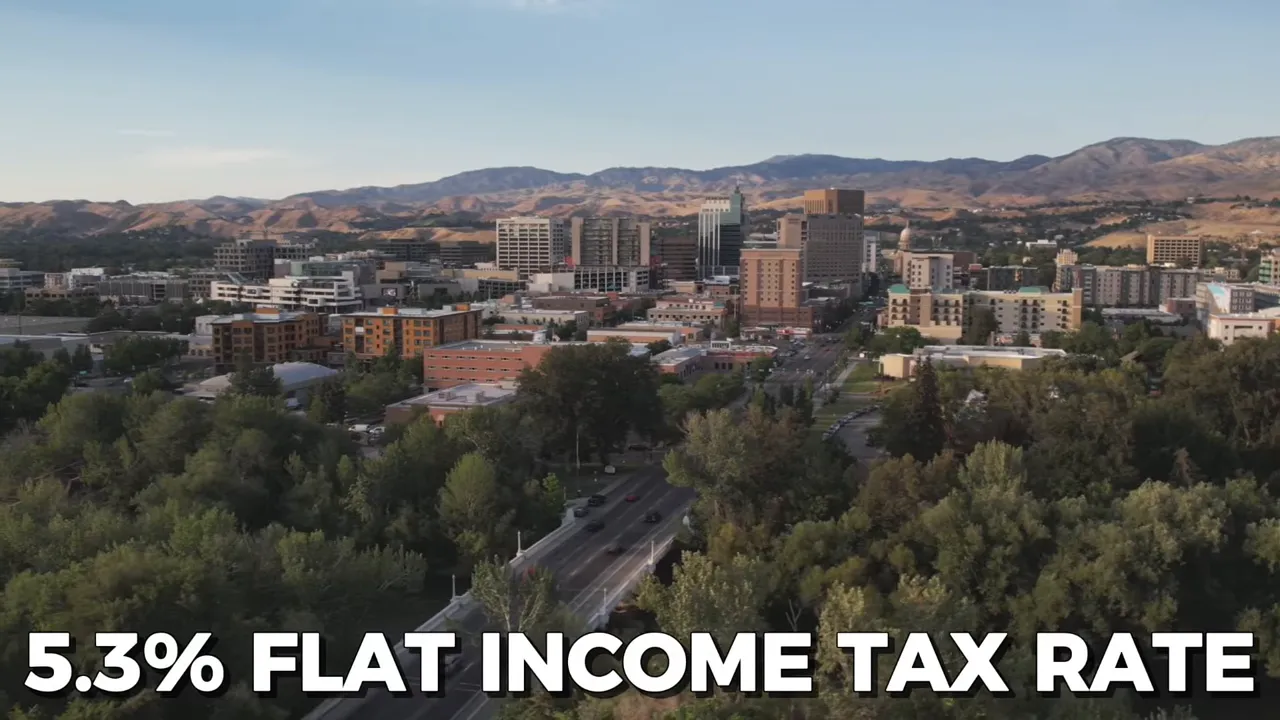
Idaho has a flat income tax rate of 5.3%. Every dollar of ordinary income is taxed at 5.3%, and the rate was described as having decreased from 5.69% as of January 1, 2025.
Capital gains in Idaho are taxed at the same 5.3% rate, with no additional surcharge for gains over a million dollars.
In other words, for a liquidity event such as a company sale or major stock event, the state tax story is relatively straightforward.
The property tax picture is also discussed. Idaho’s property tax averages are described as about 0.5% to 0.67% of assessed value. On a $1 million home in the Treasure Valley, the estimate is roughly $5,000 to $7,000 per year.
By comparison, the discussion places Bay Area or Los Angeles property taxes at $12,000 to $20,000+ for a similar price point, before other special assessments.
Estate taxes are also a differentiator mentioned directly: Idaho has no estate tax (and California is also described as having no estate tax). Washington reaches 35% at the top, and Oregon reaches 16%.
There is an additional detail for high earners approaching retirement: Idaho has a no tax on Social Security income provision described as material for those drawing from large accumulated portfolios.
Boise Idaho Cost Savings for High Earners
For many relocation decisions, taxes are emotional when you feel them every month. But for a liquidity event, taxes become concrete.
Here is the estimate described for income tax savings when moving from California to Idaho.
- At $500,000 in annual earnings: state income tax goes from about $52,000 down to about $26,000, roughly $26,000 saved each year.
- At $1,000,000 in annual earnings: the savings approaches $80,000 annually, every year for the rest of your career.
For founders and equity holders, the discussion also includes a specific example for a $5 million liquidity event. Moving from California to Idaho before the event is described as saving approximately $420,000 in state taxes alone on that transaction.
That is the part that makes people act. Not because Boise suddenly becomes magical overnight, but because the “math” becomes hard to ignore.
Living in Boise Idaho: Lifestyle & Outdoor Appeal
Once people arrive, they often say the same thing. They came for the taxes, but they stay for everything else.
One of the fastest lifestyle shocks for people relocating from places like San Jose, Bellevue, Seattle, or Portland is the commute reality.
The commute comparisons shared include:
- San Jose: average commute about 35 minutes each way
- Bellevue: about 40 minutes to downtown Seattle in normal traffic
- Portland: the I 5 corridor described as genuinely suffering
- Boise: the worst commute in the metro described as about 20 to 25 minutes, and many suburbs about 10 to 15 minutes
That means more than less time. It means hours of life back each week.
Then there is nature access.
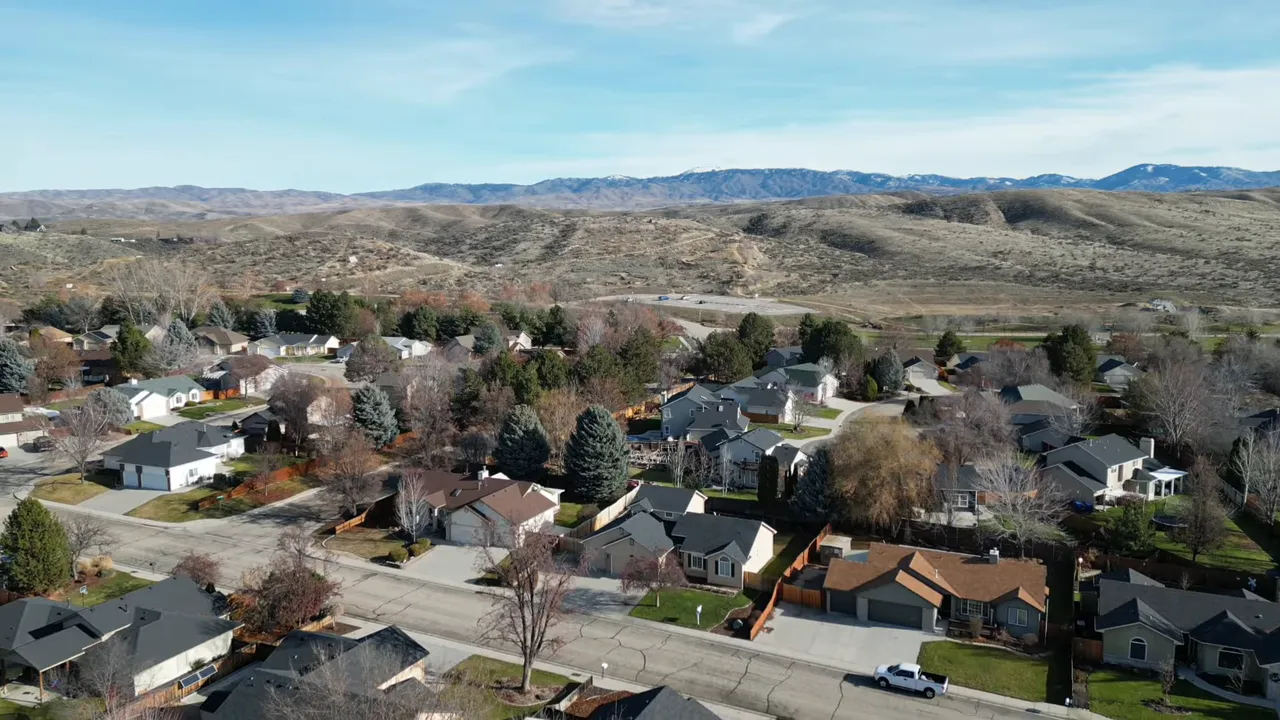
Relocators from Seattle often describe weekend outdoor plans as “production.” In Washington, you can have great access to nature, but you might also battle parking at trailheads, crowds, and weather risk. Boise is described as different in a way that feels subtle until you live it.
The described experience in the Treasure Valley is:
- Hiking in the foothills on a Tuesday morning and passing only a few people
- Bogus Basin about 20 minutes from downtown
- Payette River about 45 minutes
- Sun Valley about 2 and a half hours
- Ability to ski in the morning and be back at a desk early afternoon
- McCall as a legitimate lake town about 2 hours up the highway
Idaho is described as having nature “ambient to daily life,” not something you chase on weekends with a long lead time.
Boise Idaho Schools & Private Tuition Costs
For high earners with kids, school quality is not a minor decision item. It can be a major line item in the budget.
The comparisons described are stark: if you have been paying $30,000 to $60,000 per year in private school tuition in California or Seattle, the public school ecosystem in the Treasure Valley, particularly in Eagle and Meridian, can feel like a revelation.
Specific examples mentioned include:
- North Star Charter School in Eagle, ranked number one public school in the state of Idaho (as described)
- West Ada School District consistently placing multiple schools in Idaho’s statewide top 10 (as described)
The direct cost logic is compelling: for a family with two or three kids in private school, tuition might be $60,000 to $180,000 per year that stays inside the household rather than going out the door.
That is one reason families end up staying even after the tax savings are already locked in.
Boise Idaho Home Prices & Value
When high earners move to Boise area markets with California equity, the home-buying experience can feel upside down in a good way.
The discussion examples:
- A home costing about $2.5 million in Palo Alto may cost about $900,000 in Eagle
- A home costing about $1.8 million in Bellevue may cost about $700,000 in Meridian
And the claim is not just about getting less expensive real estate. It is about getting more for the money: more space, newer construction, safer streets, and better school options, while also paying less property taxes year after year.

Idaho Politics & Why It Matters to High Earners
It is tempting to call taxes the entire story, but the emotional side matters too.
Idaho is described as one of the most consistently conservative states in the country, with lower regulation, lower taxes, and respect for property rights and personal freedom. In contrast, the places many high earners come from are described as becoming increasingly aggressive toward wealth, income, and businesses.
For founders and equity holders, that difference creates a psychological shift: a sense that the government is trying to attract you rather than extract you.
Boise Idaho Real Estate: Eagle, Meridian & Foothills
The Treasure Valley market is not one-size-fits-all. There are different entry points depending on whether you want established communities, master planned luxury, or foothills living.
In the discussion, many high earning relocation clients end up in Eagle.
Examples shared include:
- Eagle median sales price crossing $1 million in late 2025
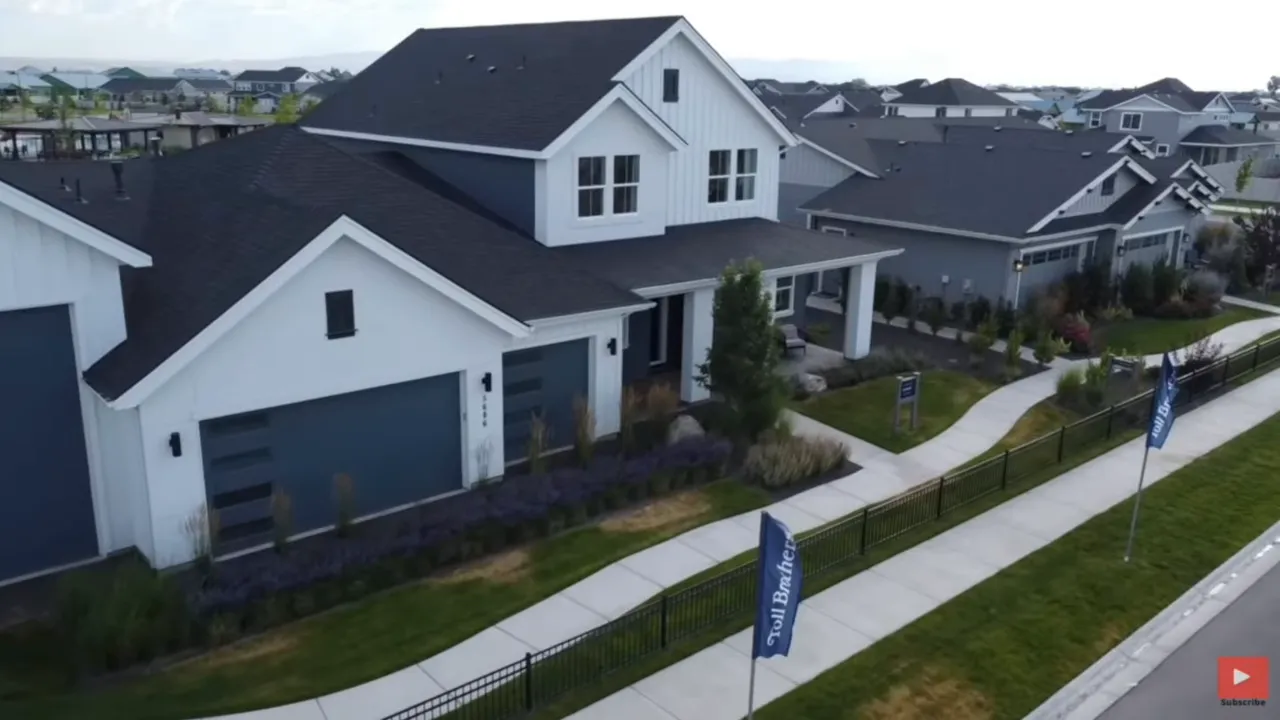
- Carrara Estates by Toll Brothers starting around $890,000 for estate sized lots with luxury finishes and walkability to downtown Eagle
- Two Rivers, described as a 245 acre community with 17 lakes and 41 waterfalls, with new construction from the 800s into the millions
- Mace River Ranch, described as a gated riverside community with 192 acres of Boise River frontage
For buyers coming with California equity, Eagle is positioned as an upgrade rather than a compromise. The reasoning given is that you can buy into safer communities with better school options and then decide what to do with the difference in price.
In Meridian, the description includes a slightly lower median price, with newer master planned luxury communities delivering a similar lifestyle at a lower entry point. For tech executives seeking modern construction with community infrastructure, Meridian is portrayed as a strong fit.
For those who want foothills living, the discussion mentions communities above the valley such as Valnova and Avimor in the Eagle foothills, with entry points in the 500s and resort-style amenities plus extensive trails and views.
The practical advice is also repeated: come visit before deciding, ideally spending a long weekend. We set it up as an experience match to your preferences, because many people who think they are just checking a box end up falling in love after seeing the area in person.
Moving to Boise Idaho: Checklist for High Earners
If you are serious about moving to Boise, Idaho, the decision needs more than a spreadsheet.
Here is the checklist we follow conceptually when advising high earners:
- Quantify tax exposure for ordinary income and for the next liquidity event you are realistically planning.
- Ask about timing and residency determination windows, since some tax proposals can include specific cutoff dates.
- Compare property tax and school cost, not just purchase price.
- Visit neighborhoods intentionally with a schedule that reflects how you actually live: commute patterns, everyday convenience, and access to nature.
- Make sure the home matches your life, not just the headline price. Space, construction quality, neighborhood safety, and school options matter.
One more practical tool mentioned is a free interactive map of the Treasure Valley, including suburbs, new construction builders, and neighborhoods. The point is to reduce guesswork by focusing your time on areas that fit your goals.
View Homes For Sale in Boise, Idaho
FAQ About Moving to Boise Idaho
Is Idaho really a flat income tax state?
Yes. The structure discussed is a flat 5.3% income tax rate on ordinary income, and capital gains are taxed at the same 5.3% rate with no surcharge on gains over a million dollars.
Why do high earners say Boise is different from simply relocating for taxes?
Because the savings often come with quality of life upgrades that accumulate quickly: shorter commutes, easier access to outdoor activities, school options that can reduce or replace private tuition, and generally lower housing and property tax costs for comparable price ranges.
What tax changes were highlighted for California?
The discussion emphasized California’s 13.3% top income tax rate and that capital gains can be taxed like ordinary income. It also described a proposed one-time 5% wealth tax for very high net worth residents, with a residency determination date of January 1, 2026.
Did Washington move away from no-income-tax completely?
The discussion did not frame it as a return to broad income tax. Instead, it highlighted added capital gains tiers for gains above $1 million and changes to the estate tax framework.
How is Oregon different regarding capital gains?
The discussion described Oregon as treating capital gains as ordinary income, subject to a top 9.9% rate, along with possible additional local taxes in certain metro areas.
What commute and outdoor access comparisons were shared?
Commutes were described as around 35 minutes each way in San Jose, about 40 minutes to downtown Seattle from Bellevue, and in Portland a suffering I-5 corridor. In Boise, the worst commute was described as 20 to 25 minutes with many suburbs at 10 to 15 minutes, and outdoor access was portrayed as easier and less crowded.
What home areas were mentioned most for high earning relocation clients?
The discussion focused heavily on Eagle and Meridian, plus foothills communities like Valnova and Avimor above the valley.
Read More: 3 Best Small Towns Near Boise You NEED to See: Emmett, Kuna, & Middleton